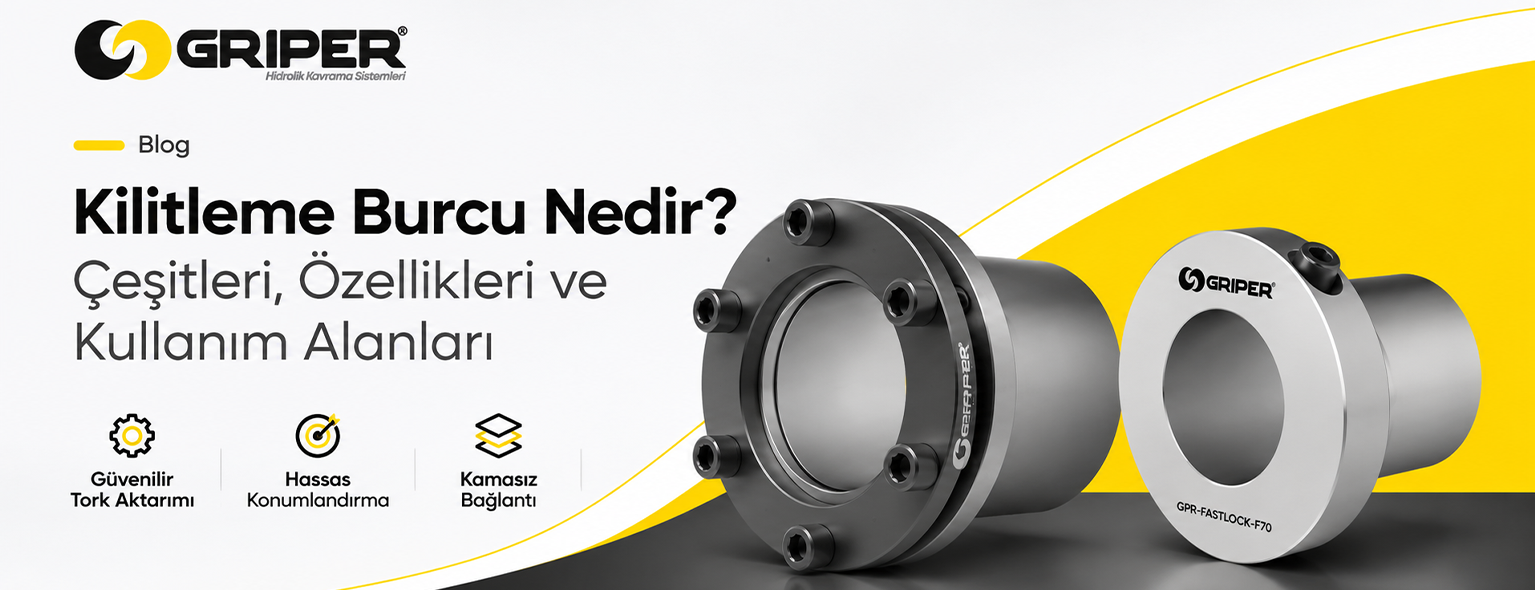
Reliable, precise and durable connections between shafts and hubs are essential for the performance of industrial power transmission systems. A locking bush is an important mechanical connection component designed to secure rotating machine elements onto shafts and enable reliable torque transmission.
From conventional mechanical connections to modern hydraulic locking technologies, locking bushes offer different solutions for industrial applications requiring installation efficiency, precise positioning and reliable power transmission.
But what is a locking bush, how does it work, where is it used, and how do you choose the correct locking bush for your application?
In this comprehensive guide, we explore the working principles, types, advantages, dimensions, installation procedures and industrial applications of mechanical and hydraulic locking bushes.
A locking bush, also referred to as a locking bushing, is a shaft-hub connection component designed to secure pulleys, gears, couplings, rollers and other rotating machine elements onto a shaft by generating clamping force.
Depending on their design, locking bushes can operate through mechanical compression or hydraulic pressure.
The resulting radial clamping force creates friction between the shaft and hub surfaces, allowing rotational motion and mechanical power to be transmitted between connected components.
Locking bushes are particularly useful in applications requiring keyless shaft-hub connections, where conventional keys and keyways may not be desirable.
Modern locking bush technologies provide connection solutions for different shaft diameters, torque requirements and industrial operating conditions.
The primary function of a locking bush is to establish a reliable connection between a shaft and a mounted machine component.
In industrial machinery, mechanical power generated by electric motors, gearboxes and other drive systems must be transferred to different rotating components.
The connection must be capable of withstanding operating loads while preventing unwanted relative movement between the shaft and hub.
The main functions of locking bushes include:
Selecting the correct locking bush is essential for achieving a connection that meets the technical requirements of the machinery.
The working principle of a locking bush is based on generating radial clamping force between the shaft and hub.
In mechanical locking bushes, tightening screws cause tapered or specially designed surfaces to move relative to each other. This movement creates contact pressure between the shaft and hub.
Hydraulic locking bushes, on the other hand, use hydraulic pressure to generate the required clamping force.
In both connection methods, the main objective is to create sufficient friction between the contact surfaces to transmit mechanical power.
The torque transmission capacity of a locking bush depends on several technical factors, including:
These factors must be evaluated when selecting a locking bush for industrial machinery.
Different types of locking bushes are available to meet various industrial connection requirements.
A mechanical locking bush typically uses tightening screws and tapered surfaces to generate radial clamping force.
When the screws are tightened according to the manufacturer's specifications, a mechanical connection is established between the shaft and hub.
Mechanical locking bushes are widely used in industrial power transmission applications.
A hydraulic locking bush is a shaft-hub connection device that uses hydraulic pressure to generate clamping force.
Depending on the product design, hydraulic pressure can help distribute clamping forces evenly across the contact surfaces.
Hydraulic locking bushes offer an alternative connection technology for applications requiring precise positioning, compact construction and efficient installation.
A taper locking bush uses tapered surfaces to generate radial clamping pressure.
These mechanical connection components can be used to secure pulleys, sprockets, gears, couplings and other rotating machine elements.
A keyless locking bush is designed to establish a shaft-hub connection without requiring a conventional key or keyway.
Torque is transmitted through friction generated between the contact surfaces.
Keyless locking systems can provide design advantages in applications where traditional keyed connections are unsuitable.
A hydraulic locking bush is a modern shaft-hub connection technology that uses hydraulic pressure instead of conventional mechanical compression methods to generate clamping force.
In modern machine design, installation time, connection accuracy, maintenance efficiency and available mounting space are important engineering considerations.
Hydraulic locking systems offer alternative solutions for these requirements.
Depending on the product design and application, hydraulic locking bushes may provide the following advantages:
GRIPER develops hydraulic locking and shaft-hub connection technologies, including HIDROLOCK and POWERLOCK, for various industrial power transmission applications.
GRIPER HIDROLOCK is a hydraulic locking system developed to establish reliable connections between shafts and hubs.
Its single radial screw design provides an alternative approach to conventional mechanical locking systems that may require multiple tightening screws.
The hydraulic operating principle generates clamping pressure between the shaft and hub, supporting reliable torque transmission and precise positioning under suitable operating conditions.
HIDROLOCK can be considered for industrial machinery where available mounting space is limited and connection precision is important.
The appropriate HIDROLOCK model should be selected according to shaft diameter, hub geometry, torque requirements and operating conditions.
GRIPER POWERLOCK is a hydraulic locking solution developed as an alternative to conventional mechanical shaft-hub connection systems.
Using hydraulic pressure, POWERLOCK generates clamping force between the shaft and hub to support mechanical power transmission.
POWERLOCK can be considered by machine manufacturers and industrial businesses looking for alternatives to traditional taper bushes, mechanical locking assemblies and conventional shaft locking systems.
The selection between HIDROLOCK and POWERLOCK should be based on the technical requirements and mounting geometry of the application.
Locking bushes provide various advantages in industrial power transmission applications.
A correctly selected and installed locking bush can provide reliable torque transmission between the shaft and hub.
For high-torque applications, the technical capacity of the product and operating conditions must be carefully evaluated.
Concentricity between shafts and hubs is particularly important in machinery requiring high precision.
Suitable locking bush designs can support accurate positioning of rotating machine components.
Keyless locking bushes can eliminate the need for conventional keys and keyways in suitable applications.
This allows engineers to consider alternative shaft designs and connection methods.
Hydraulic locking bushes, depending on their design, can simplify installation and removal procedures.
This feature is particularly valuable in machinery requiring frequent maintenance or component replacement.
Compact locking bushes can provide alternative connection solutions where installation space is limited.
This allows machine manufacturers to use available mounting space more efficiently.
Removable locking systems can facilitate periodic maintenance, machine servicing and component replacement.
Locking bushes are available in different dimensions and configurations to meet various industrial connection requirements.
Locking bush applications cover a wide range of industries where rotational motion and mechanical power must be transmitted between machine components.
Automotive production lines, testing equipment and industrial automation systems often require precise shaft-hub connections.
Suitable locking bushes can be used in various automotive manufacturing applications.
Packaging machines contain rollers, pulleys, gears and other rotating components that require accurate positioning and reliable power transmission.
Locking bushes can be considered for these mechanical connections.
Reliable torque transmission is essential in conveyor drums, drive pulleys and material handling equipment.
Appropriate locking systems help establish secure connections between shafts and rotating components.
Food processing, filling and packaging machinery may require connection precision, maintenance efficiency and suitable material properties.
Locking bushes can be evaluated where the selected product meets the application's technical and hygiene requirements.
Accurate roller positioning and controlled motion transmission are important for printing quality.
Precision shaft-hub locking systems can be used in suitable printing and engraving applications.
Metal processing machinery, production lines and heavy-duty power transmission systems require connection components capable of withstanding operating loads.
Locking bushes should be selected according to the mechanical requirements of these applications.
Testing systems may require precise measurements, controlled motion and reliable mechanical connections.
Suitable locking bushes can support these technical requirements.
Applications requiring advanced engineering precision must use connection technologies that meet the relevant technical specifications.
Locking bushes can be considered for suitable manufacturing and testing equipment within these industries.
Locking bush sizes vary according to product design, shaft diameter, hub geometry and torque transmission capacity.
Knowing the shaft diameter alone is not sufficient to determine the correct locking bush size.
The following technical parameters should be considered during product selection:
Selecting an unsuitable locking bush size or a product with insufficient capacity may negatively affect connection performance.
The manufacturer's technical catalogues, dimensional tables and installation specifications should always be considered.
Selecting the correct locking bush is an important engineering decision that can influence the reliability and performance of industrial machinery.
The dimensions of the shaft and hub must be compatible with the selected locking bush geometry.
The nominal and maximum torque transmitted during operation should be determined.
Sudden load changes and dynamic operating conditions must also be considered.
High-speed applications may require additional attention to concentricity, balance and connection integrity.
The available mounting space directly influences which locking bush designs can be used.
Compact hydraulic locking systems may offer an alternative in applications with limited installation space.
Machinery requiring frequent installation and removal may benefit from locking systems designed to simplify these procedures.
Conventional mechanical locking bushes and modern hydraulic locking systems should be compared according to the specific requirements of the application.
GRIPER hydraulic locking solutions can be evaluated as alternative connection technologies during this selection process.
Correct locking bush installation is essential for achieving reliable connection performance.
Installation procedures vary depending on whether the locking bush uses mechanical or hydraulic operating principles.
A general installation process may include the following steps:
Conventional mechanical locking bushes may require several screws to be tightened in a specific sequence.
Hydraulic locking systems such as GRIPER HIDROLOCK offer a different installation approach through single radial screw operation.
The technical installation instructions for the selected product must always be followed.
Many locking bushes are designed to provide removable shaft-hub connections.
Before removal, the machinery must be safely shut down and isolated from its energy sources. Any loads acting on the connection must also be controlled.
The manufacturer's recommended removal procedure should then be followed.
Mechanical locking bushes may require specific extraction screws or release procedures, while hydraulic locking bushes use product-specific release mechanisms.
After removal, the shaft, hub and locking bush surfaces should be inspected for wear or damage.
Whether the locking bush can be reused depends on its technical condition and the manufacturer's specifications.
A locking bush and a taper bush are both used in industrial power transmission systems. However, these terms do not always describe the same connection technology.
A taper bush typically uses a tapered geometry to mount pulleys, sprockets and similar machine elements onto shafts.
A locking bush is a broader term that can include different mechanical or hydraulic connection systems designed to generate clamping force between shafts and hubs.
Some locking bushes use tapered mechanical surfaces, while others operate through hydraulic pressure.
The correct connection technology should be selected according to shaft dimensions, torque requirements, mounting geometry and operating conditions.
A taper locking assembly typically uses tapered rings and tightening screws to generate radial clamping force between the shaft and hub.
Locking bushes can operate through different mechanical or hydraulic principles depending on their design.
Conventional taper locking assemblies rely on mechanical compression, whereas hydraulic locking bushes use hydraulic pressure to generate clamping force.
Both connection technologies offer different technical characteristics and may be suitable for different industrial applications.
FeatureMechanical Locking BushHydraulic Locking BushWorking principleMechanical compressionHydraulic pressureClamping methodTapered surfaces or mechanical elementsHydraulic clamping systemInstallationDepends on product designSingle-screw installation in certain designsCentering accuracyDepends on design and tolerancesDepends on hydraulic design and tolerancesRemovalMechanical release procedureProduct-specific hydraulic release procedureApplicationGeneral power transmission systemsVarious industrial applications, including precision and compact connectionsMaintenanceProduct-specific requirementsPotential for simplified installation and removal
The performance of both connection technologies depends on the technical specifications of the selected product and the operating conditions of the application.
Locking bush prices vary depending on product dimensions, operating principles, material specifications and technical capacity.
The main factors affecting locking bush prices include:
When selecting industrial connection components, the initial purchase price should not be the only consideration.
Installation time, maintenance requirements, component replacement and machine downtime can also influence the total cost of ownership.
Contact GRIPER for technical information and pricing regarding hydraulic locking solutions suitable for your application.
Choosing a locking bush without evaluating the complete operating conditions can lead to connection problems.
Common selection mistakes include:
A detailed technical assessment helps identify the appropriate locking bush and connection technology for the machinery.
A locking bush is a shaft-hub connection component that generates clamping force to secure rotating machine elements onto shafts and transmit mechanical power.
Locking bushes are used to secure pulleys, gears, couplings, rollers and other rotating components onto shafts and support reliable torque transmission.
A hydraulic locking bush uses hydraulic pressure to generate radial clamping force between the shaft and hub. The resulting contact pressure creates friction that enables torque transmission.
Yes. Many locking bushes are designed to provide keyless shaft-hub connections without requiring traditional keys or keyways.
Locking bushes are used in automotive manufacturing, packaging machinery, conveyor systems, metal processing, industrial automation, printing equipment and various power transmission applications.
The correct locking bush size should be determined according to shaft diameter, hub dimensions, torque capacity, operating speed, loading conditions and available installation space.
Suitable locking bush designs can transmit high torque. The actual capacity must be verified using the manufacturer's technical specifications.
Some locking bushes can be removed and reused. Reusability depends on the product design, component condition and manufacturer's instructions.
Yes. GRIPER HIDROLOCK is a hydraulic shaft-hub connection system that operates through a single radial screw.
Mechanical locking bushes generate clamping force through mechanical compression, while hydraulic locking bushes use hydraulic pressure to establish the connection.
Locking bush prices depend on product dimensions, model, torque capacity, materials and application-specific requirements.
GRIPER offers hydraulic shaft-hub connection technologies, including HIDROLOCK and POWERLOCK, for various industrial power transmission applications.
Selecting the right shaft-hub connection technology is essential for machine performance, installation efficiency and maintenance operations.
Alongside conventional mechanical locking bushes, modern hydraulic locking systems offer alternative solutions for different industrial engineering requirements.
GRIPER develops hydraulic locking and shaft-hub connection technologies designed to address the need for precision, reliable power transmission and efficient installation in industrial machinery.
The single radial screw HIDROLOCK system and POWERLOCK hydraulic connection technology can be considered by machine manufacturers, engineers and industrial businesses looking for alternatives to conventional mechanical connection methods.
Explore GRIPER's hydraulic locking solutions to discover suitable alternatives to traditional locking bushes, obtain technical information and identify the appropriate shaft-hub connection technology for your industrial application.
Contact GRIPER to learn more about hydraulic locking systems, product specifications and industrial power transmission solutions.


